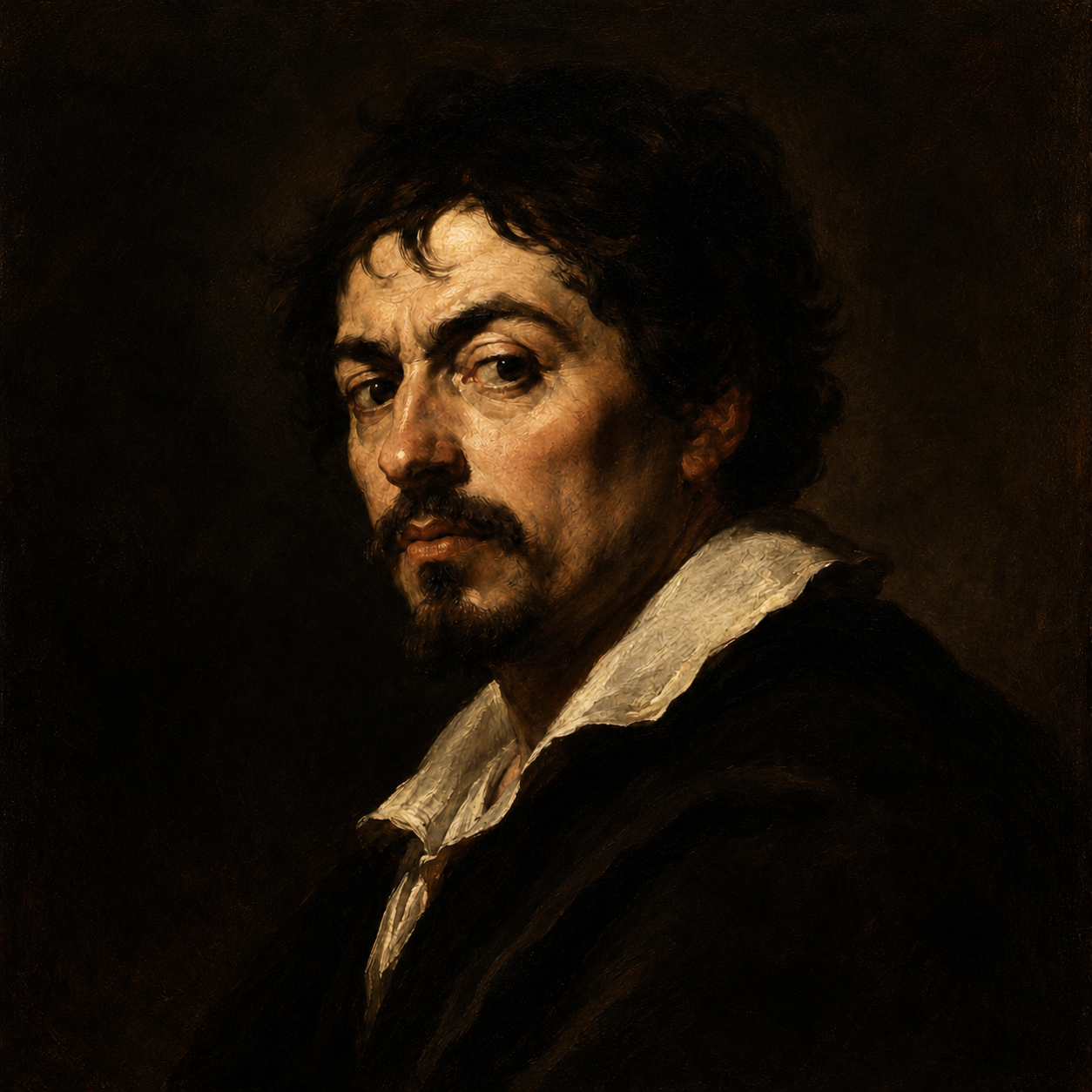
AI-assisted artist illustration created for The Baroque Art Bible. This is an artistic interpretation and not an authenticated historical portrait.
Michelangelo Merisi da Caravaggio
1571–1610
Michelangelo Merisi da Caravaggio was one of the most revolutionary painters in the history of Western art. His dramatic use of light and shadow, uncompromising realism, and intense emotional storytelling transformed European painting and laid the foundations of the Baroque style. Few artists have had such a profound influence on generations of painters, from Rubens and Rembrandt to countless artists who followed.
Born in Milan and active primarily in Rome, Naples, Malta, and Sicily, Caravaggio rejected the idealized figures and balanced compositions of the Renaissance. Instead, he painted ordinary people with striking realism, using dramatic contrasts of light and darkness—known as chiaroscuro—to draw the viewer into the heart of the narrative. His figures appear tangible and deeply human, expressing fear, doubt, suffering, joy, and faith with remarkable psychological intensity.
Like most successful painters of his time, Caravaggio received many commissions for biblical subjects. Churches, religious orders, and private patrons sought powerful visual interpretations of familiar stories, and biblical themes offered artists the opportunity to demonstrate both technical brilliance and emotional depth. Caravaggio's genius lay in presenting these ancient narratives as immediate human experiences, making sacred events feel as though they were unfolding before the viewer's eyes.
His biblical masterpieces include The Calling of Saint Matthew, The Conversion of Saint Paul, Judith Beheading Holofernes, The Supper at Emmaus, The Sacrifice of Isaac, and The Taking of Christ. In each, light becomes a storytelling device, revealing moments of revelation, conflict, or compassion while leaving much of the scene in shadow. His compositions are spare yet powerful, focusing attention on the decisive moment in the story.
This section of Art Bible explores Caravaggio's biblical paintings by placing each work within the context of the narrative it illustrates. Alongside every masterpiece, you will find the corresponding biblical passage, historical background, artistic analysis, and explanations of Caravaggio's techniques, symbolism, and innovations. Explore the complete collection and its biblical stories to deepen your appreciation of both the extraordinary paintings and the stories that inspired them, revealing why Caravaggio remains one of the most influential artists in the history of art.


