Interactive close reading
Look closer. See more
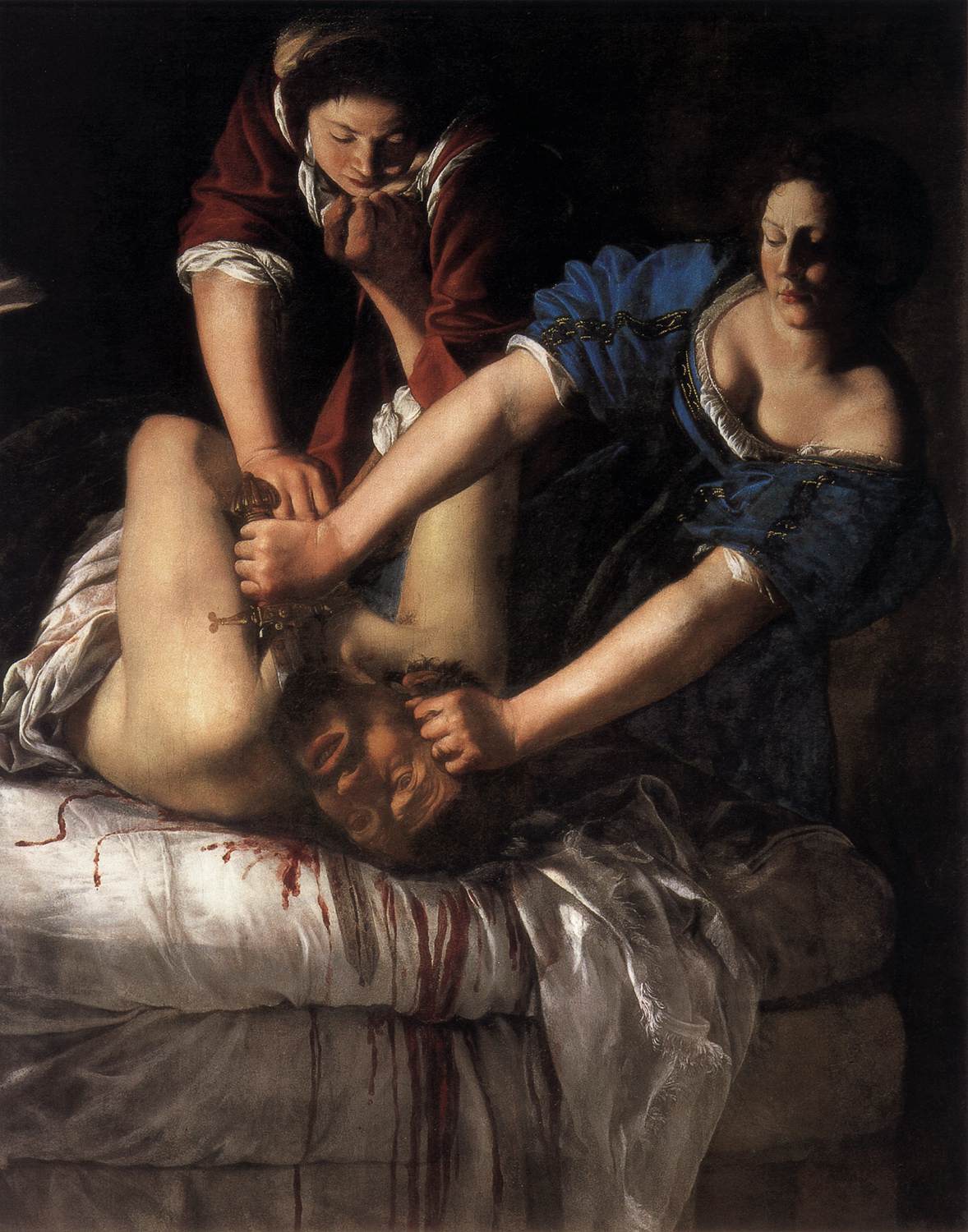
Judith leans in with both hands on the sword, her expression combining concentration, determination, and apparent revulsion. This is a woman carrying out a terrible task to save her people. Judith 8–13
Judith Beheading Holofernes · Caravaggio
Michelangelo Merisi da Caravaggio
Judith Beheading Holofernes
c. 1598–1599 · Galleria Nazionale d'Arte Antica, Rome
Biblical Passage
Judith 8–13
The story of Judith comes from the Book of Judith, a biblical book included in the Catholic and Eastern Orthodox Old Testaments and in the Septuagint, but classified among the Apocrypha in many Protestant traditions and excluded from the Jewish biblical canon.
The story takes place during a military crisis. The Assyrian general Holofernes has invaded the region and is threatening the Jewish city of Bethulia. With its inhabitants facing defeat, Judith—a wealthy and courageous widow—decides to act.
Historical Background
Caravaggio painted Judith Beheading Holofernes around 1598–1599, during his increasingly successful years in Rome. The painting is generally associated with the Roman banker and collector Ottavio Costa, an important patron who owned several works by Caravaggio.
The subject was well established in European art. Judith had long been portrayed as a courageous heroine who defeated a powerful enemy through intelligence and determination. In Christian interpretation she could also represent virtue overcoming evil and, more broadly, divine deliverance achieved through an apparently unlikely individual.
Artistic Analysis
The composition is extraordinarily concentrated.
There are only three principal figures: Judith, Holofernes, and Judith's servant Abra. Almost everything else disappears into darkness.
Caravaggio's Techniques
- Chiaroscuro
- Radical Naturalism
- The Decisive Moment
Symbolism
- Judith
- Holofernes
- The Sword
Caravaggio's Innovations
A Revolution in Biblical Storytelling
Judith Beheading Holofernes demonstrates why Caravaggio represented such a profound break with Renaissance tradition.
He does not ask the viewer merely to recognize Judith as a biblical heroine. He asks us to experience the terrifying human reality behind the story.