Interactive close reading
Look closer. See more
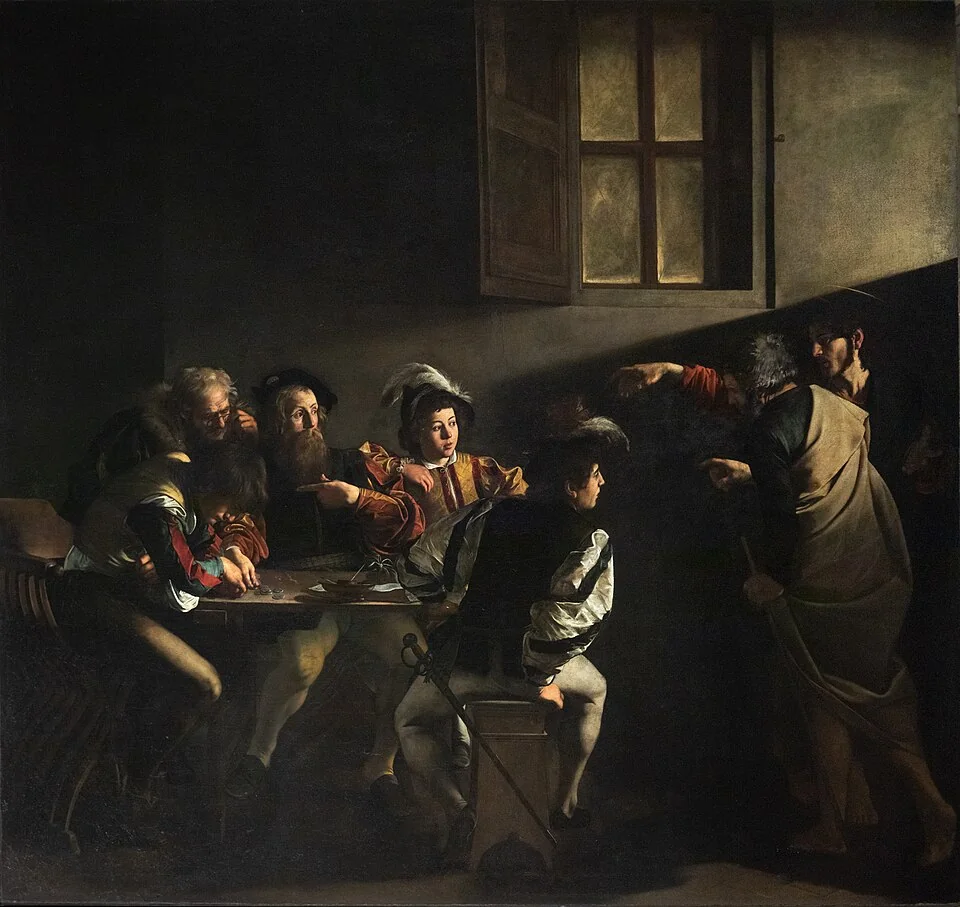
A shaft of daylight cuts diagonally across the dark room, joining the window to the booth where the taxmen sit. Matthew 9:9
The Calling of Saint Matthew · Caravaggio
Michelangelo Merisi da Caravaggio
The Calling of Saint Matthew
c. 1599–1600 · San Luigi dei Francesi, Rome
Biblical Passage
Matthew 9:9–13; Mark 2:13–17; Luke 5:27–32
The painting depicts the moment when Jesus calls Matthew, a tax collector, to become one of his disciples.
The Gospel of Matthew describes the encounter with extraordinary brevity. Jesus sees a man named Matthew sitting at the tax booth and says to him:
Historical Background
Caravaggio painted The Calling of Saint Matthew around 1599–1600 for the Contarelli Chapel in the church of San Luigi dei Francesi in Rome.
The commission was a turning point in his career.
Artistic Analysis
The painting is divided into two contrasting worlds.
On the left, five men sit around a table counting money. They wear clothing largely associated with Caravaggio's own period rather than first-century Judea.
Caravaggio's Techniques
- Chiaroscuro and Tenebrism
- Light as Narrative
- Contemporary Setting
Symbolism
- The Money
- The Light
- The Window
Caravaggio's Innovations
The Calling of Saint Matthew contains many of the innovations that transformed European painting.
The Moment Everything Changes
Perhaps the greatest achievement of The Calling of Saint Matthew is that almost nothing happens—and yet everything changes.
There is no violence, as in Judith Beheading Holofernes.
