Interactive close reading
Look closer. See more
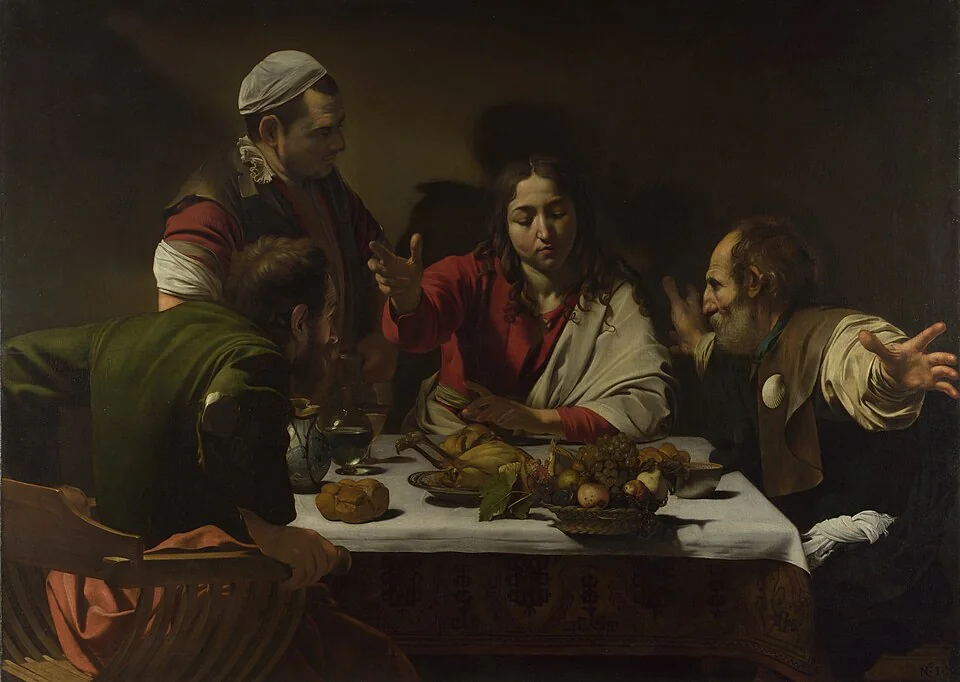
Christ's raised right hand and the bread he breaks are the recognition itself. The gesture that reveals the risen Lord is also an ordinary table act.
The Supper at Emmaus · Caravaggio
Diego Velázquez
The Supper at Emmaus
c. 1622–1623 · National Gallery of Ireland, Dublin
Biblical Passage
Luke 24:13–35
The painting refers to the encounter between the resurrected Christ and two of his disciples on the road to Emmaus, shortly after the Crucifixion.
According to the Gospel of Luke, two disciples are walking from Jerusalem to Emmaus while discussing the extraordinary events of the previous days. Jesus approaches and joins them, but they do not recognize him.
Historical Background
Velázquez probably painted The Supper at Emmaus around 1622–1623, near the end of his early Seville period, although its dating and aspects of its interpretation have been debated.
The painting is closely related to the bodegones that established Velázquez's early reputation.
Artistic Analysis
The dominant figure is not Christ.
Nor is it one of the disciples.
Velázquez's Techniques
- Naturalism
- Still-Life Painting
- Controlled Chiaroscuro
Symbolism
- The Kitchen
- The Servant
- Bread
Velázquez's Innovations
The Supper at Emmaus demonstrates several remarkable features of Velázquez's early approach to religious painting.
The Sacred Seen from the Kitchen
What makes Velázquez's Supper at Emmaus so unusual is ultimately its point of view.
The Gospel tells us about Christ and two disciples.

