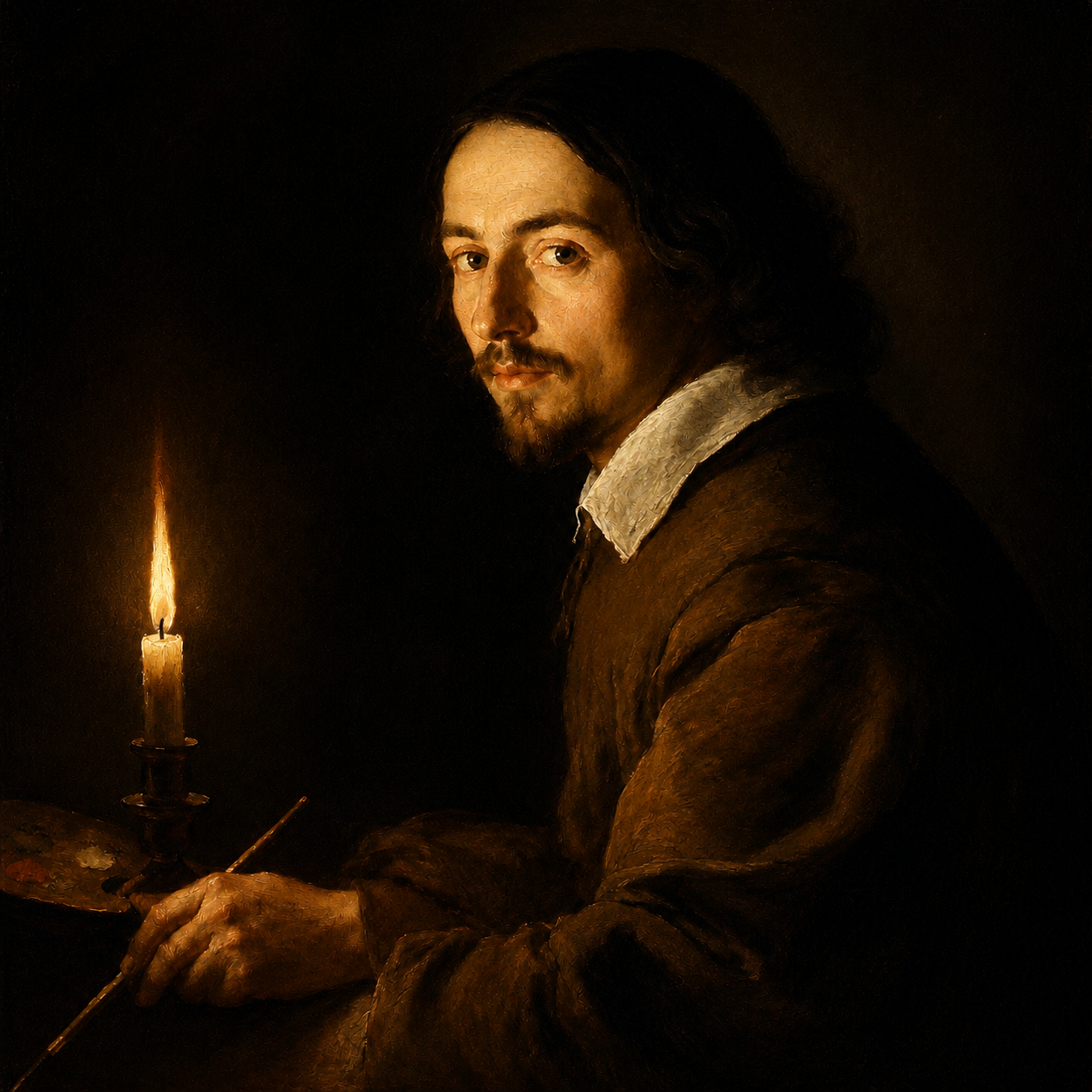
AI-assisted artist illustration created for The Baroque Art Bible. This is an artistic interpretation and not an authenticated historical portrait.
Georges de La Tour
1593–1652
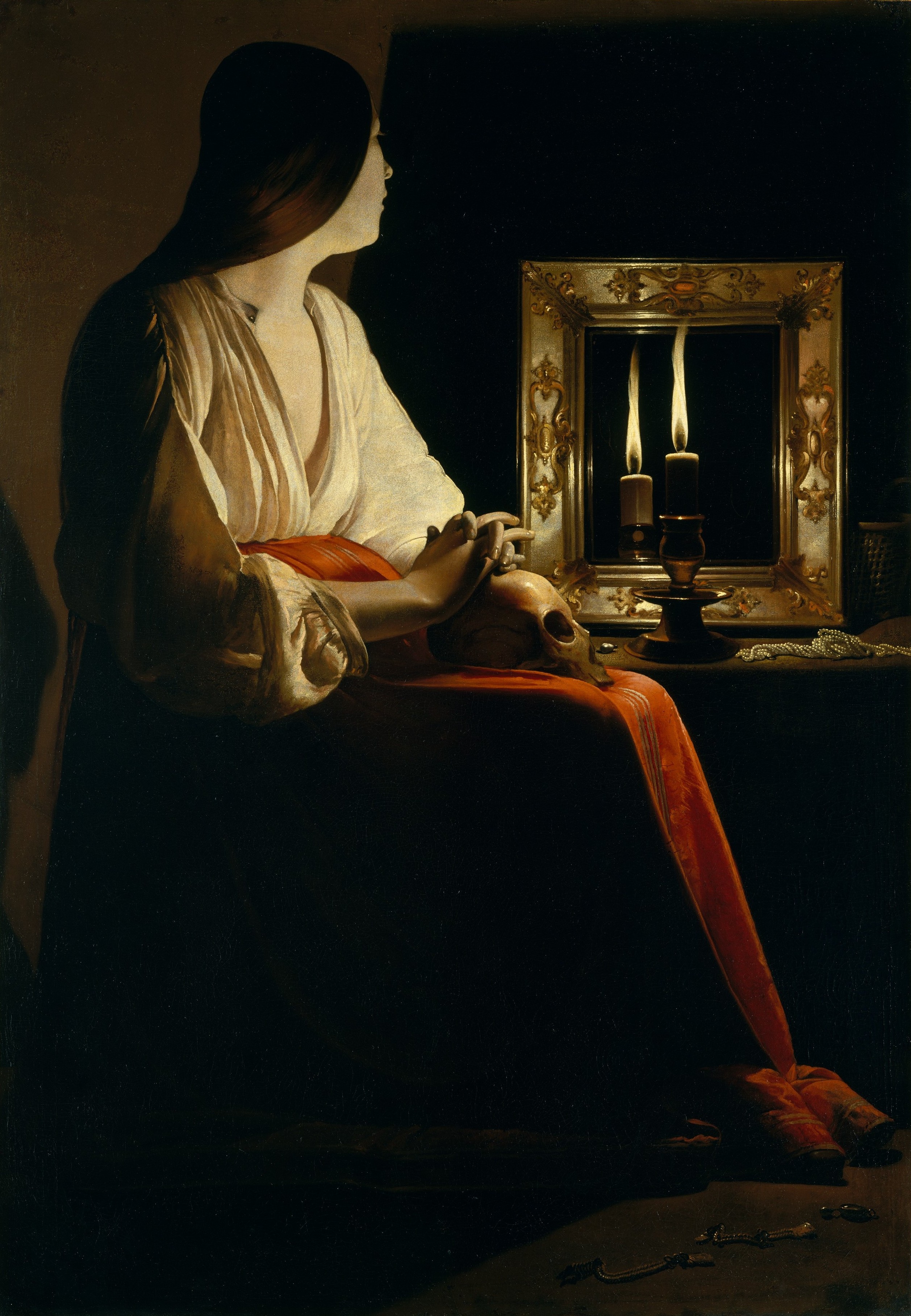
Georges de La Tour was one of the most original painters of the French Baroque and a master of quiet, contemplative storytelling. Unlike many of his contemporaries, who filled their canvases with dramatic movement and elaborate compositions, La Tour created scenes of remarkable stillness. His paintings are celebrated for their serene atmosphere, restrained realism, and extraordinary use of candlelight, which illuminates both the physical and emotional world of his subjects.
Born in Vic-sur-Seille in the Duchy of Lorraine, La Tour spent most of his career working far from the major artistic centers of Europe. Although influenced by the realism of Caravaggio, he developed a highly distinctive style. His mature works are characterized by simple compositions, carefully arranged figures, and a single light source—often a candle—whose warm glow creates an atmosphere of meditation and introspection.
Like many artists of the seventeenth century, La Tour received commissions for religious subjects. Biblical stories were among the most important themes available to painters, providing opportunities to combine technical mastery with powerful visual narratives. Rather than emphasizing dramatic action, however, La Tour focused on moments of silence, reflection, and spiritual awakening. His figures are portrayed with quiet dignity, allowing viewers to contemplate the humanity of the people behind the biblical events.
Among his finest biblical paintings are The Newborn Christ, The Adoration of the Shepherds, Saint Joseph the Carpenter, The Penitent Magdalene, The Education of the Virgin, and several depictions of Saint Sebastian and other biblical figures. His masterful treatment of light transforms ordinary interiors into profound expressions of hope, humility, and contemplation.
This section of Art Bible explores Georges de La Tour's biblical paintings by placing each work within the context of the narrative it depicts. Alongside every painting, you will find the corresponding biblical passage, historical background, artistic analysis, and explanations of La Tour's unique techniques, symbolism, and use of light. Explore the complete collection and its biblical stories to deepen your appreciation of both the masterpieces and the biblical stories that inspired them, revealing why Georges de La Tour remains one of the most distinctive and poetic painters of the Baroque era.