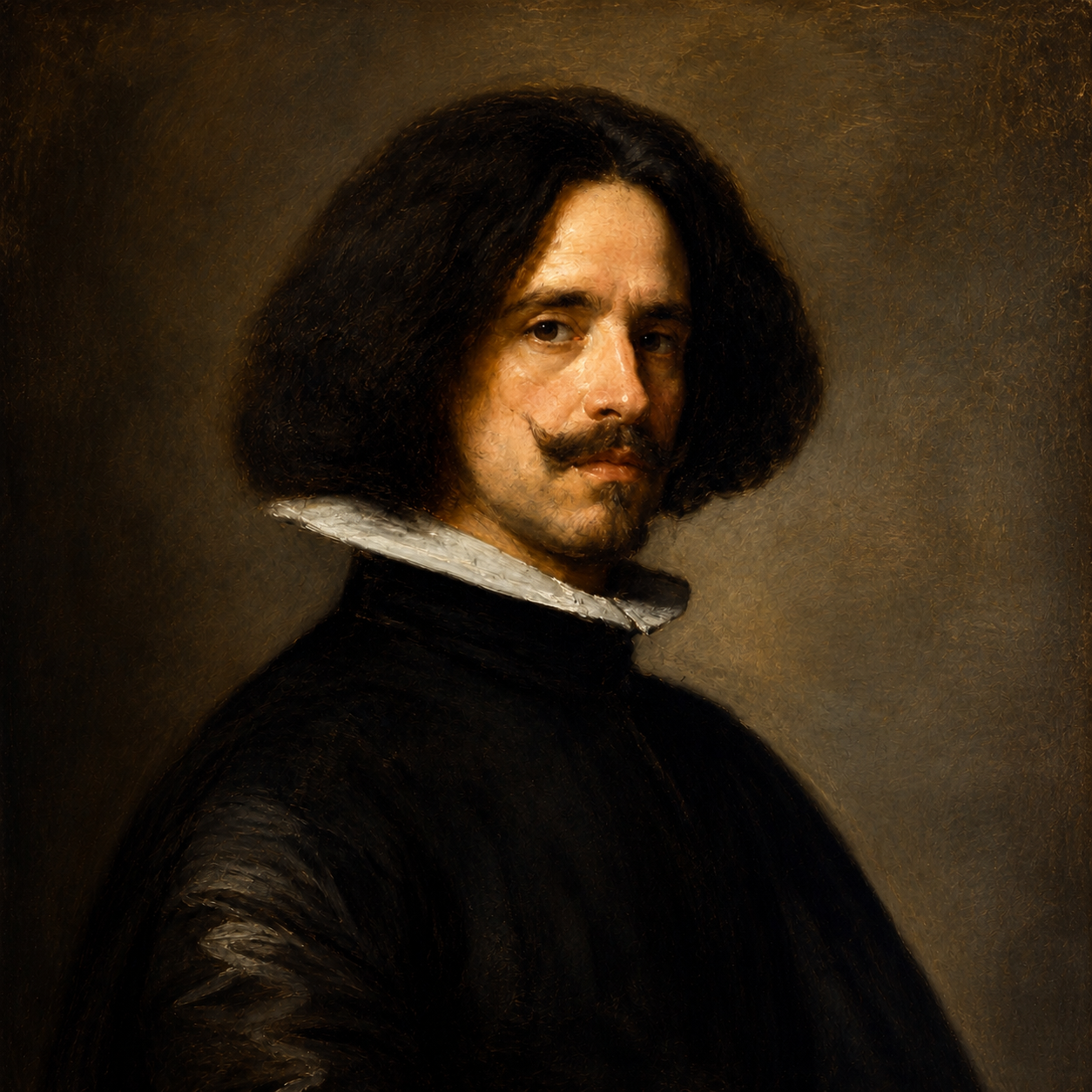
AI-assisted artist illustration created for The Baroque Art Bible. This is an artistic interpretation and not an authenticated historical portrait.
Diego Velázquez
1599–1660
Diego Rodríguez de Silva y Velázquez was the leading painter of the Spanish Golden Age and one of the greatest masters in the history of Western art. Celebrated for his extraordinary realism, subtle handling of light, and remarkable ability to capture the dignity and individuality of his subjects, Velázquez elevated both portraiture and religious painting to new artistic heights.
Born in Seville and later appointed court painter to King Philip IV of Spain, Velázquez spent much of his career serving the Spanish royal court. Although he is best known today for masterpieces such as Las Meninas and The Surrender of Breda, his early career was shaped by religious commissions. Churches, monasteries, and private patrons commissioned paintings illustrating biblical events, providing young artists with opportunities to demonstrate their technical skill and narrative ability.
Influenced by Caravaggio's dramatic realism, Velázquez developed a distinctive style characterized by naturalistic figures, restrained compositions, and masterful use of light. Rather than emphasizing theatrical drama, he often portrayed biblical events with quiet humanity and psychological depth. His figures appear believable and approachable, inviting viewers to reflect on the people behind the stories rather than simply the events themselves.
Among his finest biblical paintings are Christ in the House of Martha and Mary, The Adoration of the Magi, Christ Crucified, The Temptation of Saint Thomas Aquinas, and The Supper at Emmaus. These works reveal his remarkable ability to combine careful observation of everyday life with profound spiritual and emotional meaning. His restrained style allows the narrative to unfold naturally, without unnecessary embellishment, while his technical mastery creates a powerful sense of realism.
This section of Art Bible explores Velázquez's biblical paintings by placing each work within the context of the story it depicts. Alongside every painting, you will find the corresponding biblical passage, historical background, artistic analysis, and explanations of Velázquez's techniques, symbolism, and artistic innovations. Explore the complete collection and its biblical stories to deepen your appreciation of both the masterpieces and the biblical narratives that inspired them, showing why Velázquez remains one of the defining figures of European art.


